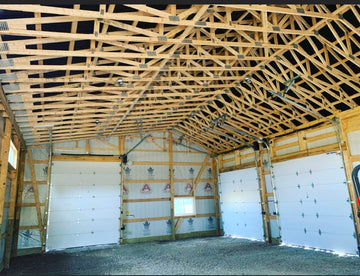
Building a pole barn is one of the most cost-effective ways to add storage, workspace, or even a home to your property. At the heart of these structures are the trusses—the engineered wooden frames that support the roof and allow for the wide, open spans pole barns are known for.
However, if you’ve checked lumber prices lately, you know the market is in a state of flux. With new trade policies and tariffs taking effect under the Trump administration in 2025, the cost of the wood used to build those trusses is shifting.
Here is what you need to know about pole barn trusses and how current import/export policies are impacting your build.
What Makes Pole Barn Trusses Different?
Unlike standard house trusses, pole barn trusses are designed to clear-span large distances—often 30, 40, or even 60 feet—without needing interior load-bearing walls.
- Material Strength: They typically use high-grade Softwood Lumber (like Southern Yellow Pine or Douglas Fir) to handle heavy snow and wind loads.
- Engineering: Because pole barns rely on posts spaced further apart (8 to 12 feet), the trusses must be engineered to distribute weight efficiently across fewer points of contact.
- Cost Efficiency: Trusses are the largest "lumber-heavy" component of your project. When the price of 2x4s and 2x6s goes up, the price of your trusses is the first thing to move.
How Trade Policies are Affecting Lumber Prices
As of late 2025, the lumber market is navigating a complex new landscape of tariffs and trade negotiations. President Trump’s "America First" trade stance has introduced several measures aimed at boosting domestic production, but they have had immediate side effects on pricing.
1. Increased Tariffs on Canadian Softwood
Canada provides roughly 25% to 30% of the softwood lumber used in U.S. construction. Under recent executive actions and Department of Commerce rulings in 2025:
- Combined Duties: Total tariffs on Canadian lumber have climbed significantly, with some importers facing combined anti-dumping and countervailing duties of nearly 35%.
- The Price Ripple: When it costs more to bring wood across the border, U.S. suppliers often raise their prices to match the market or cover the increased cost of imported stock.
2. Reciprocal Tariffs and Global Trade
The administration has moved toward a "Reciprocal Tariff" model, meaning if a country taxes U.S. goods, the U.S. matches that tax on their exports to us.
- European Imports: While Canada is the primary source, high-end lumber from Germany and Sweden has also been subject to shifting duties (capped at around 15% for some partners), adding volatility to the supply of premium truss materials.
- Steel Impacts: Don't forget the metal gusset plates that hold trusses together. Increased tariffs on imported steel (often 25% or higher) have nudged the cost of truss assembly upward, even when the wood remains stable.
3. The Goal vs. The Reality
The administration's goal is to incentivize the reopening of U.S. sawmills and reduce dependence on foreign wood. However, industry experts note that:
- Domestic Lag: It takes time for U.S. mills to increase capacity. In the short term, this creates a "supply gap" that keeps prices elevated.
- Project Costs: Many builders estimate that these trade policies have added between 6% and 15% to the total cost of a pole barn package in 2025.
Tips for Building in This Market
If you are planning a project, you don't necessarily have to wait for a "market crash" that may not come. Instead, try these strategies:
- Lock in Quotes Early: Many truss manufacturers can only guarantee prices for 14–30 days because of market volatility. If you get a price you like, sign the contract.
- Consider Local Species: Ask your builder if Southern Yellow Pine (largely domestic) is a viable alternative to imported Spruce-Pine-Fir (SPF) for your specific truss design.
- Check for "Off-Season" Discounts: While lumber prices are currently high, demand often dips in the winter months (late December through February), which can lead to slight relief in labor and manufacturing costs.
Looking Ahead
While tariffs have introduced a new layer of expense, the long-term hope is a more robust domestic timber industry that is less susceptible to global supply chain shocks. For now, staying informed and budgeting for a 10% contingency is the smartest way to approach your new pole barn.
https://youtu.be/pBGAf80dYH0